
PIB News
Climate history reveals monsoon fluctuations through sediment transport and farming adaptations.
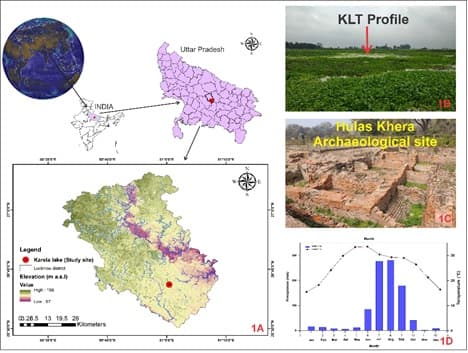
A new study by scientists from the Birbal Sahni Institute of Palaeosciences reveals that fluctuations in the Indian Summer Monsoon have significantly influenced various environmental and agricultural factors in the Central Ganga Plain over time. The research highlights how these climatic changes affected lake hydrology, sediment transport, and early farming practices. Understanding these historical interactions can enhance strategies for climate adaptation, water security, and disaster risk reduction. This study also aims to shed light on how communities in the Central Ganga Plain adapted to climatic extremes following the decline of the Indus Valley Civilization.
The Radius summarizes this story. Read the original report from PIB News.
Read Full